Teaching / students and projects

Teaching.

Much of my research happens together with students, through thesis projects and practical courses. This page collects some of that work.

Practicum

A practicum on testing autonomous driving.

Together with my colleagues Xingcheng Chen and Lev Sorokin, and under the supervision of Andrea Stocco, I helped organize a practicum course on testing automated driving systems. Students worked in small, mentored teams, applying automated testing techniques—both in simulation and on small-scale physical vehicles—to systems such as a lane-keeping controller based on a deep neural network. The course ended with a final event where each team presented its prototype.

That edition's two groups worked on opposite sides of the same problem. One used generative models to translate simulated camera images into realistic ones in real time, so a model trained on real data could still drive in simulation. The other used domain-augmentation techniques during training, so a model trained only in simulation could hold up when tested in the real world.

Supervision

Student projects.

Some of the student projects I have supervised or co-supervised.

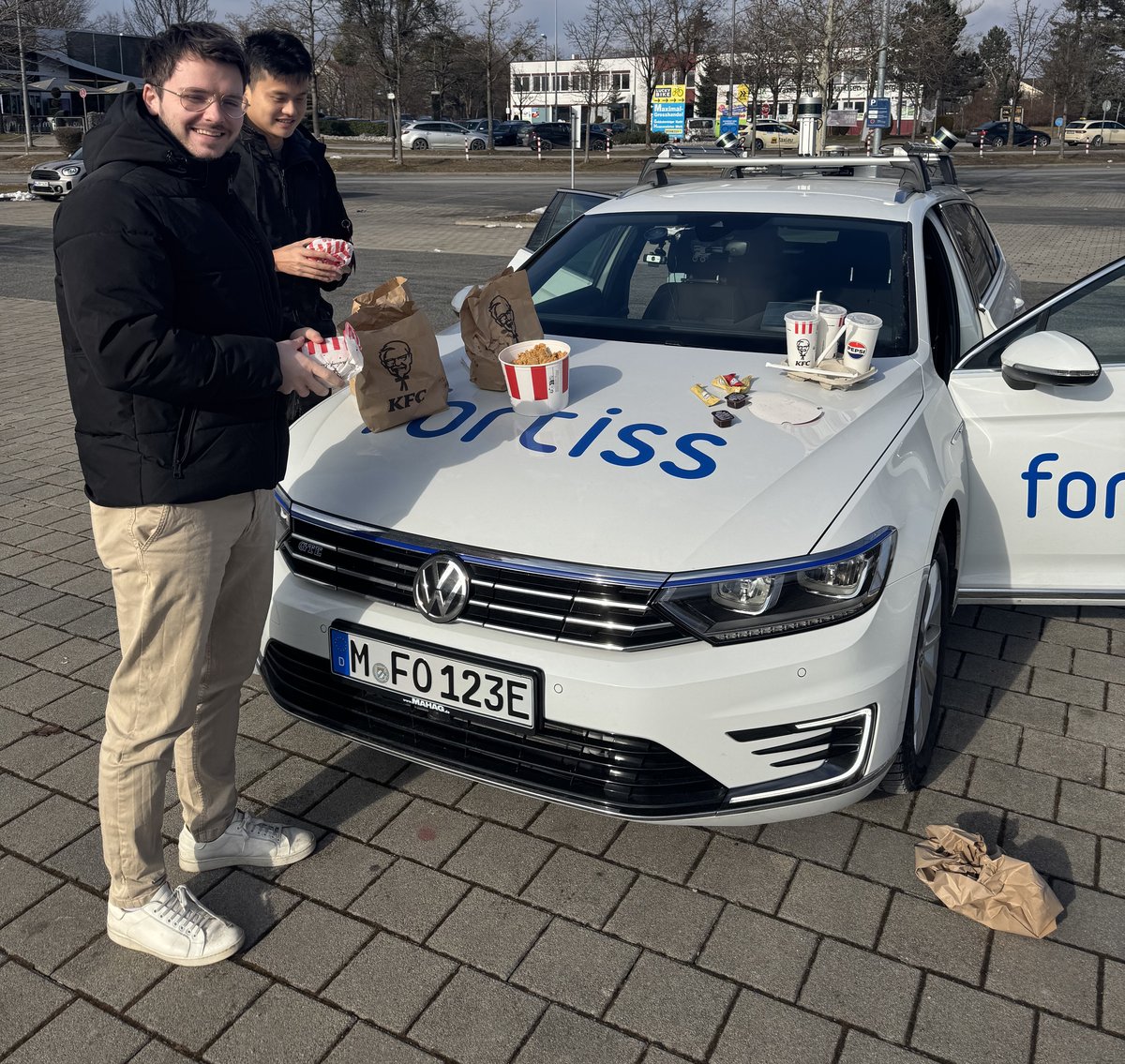
Davide Jannussi and Xun Ma next to Fortuna

Master’s students

Davide Jannussi & Xun Ma

Davide built Cam2Sim, turning our recorded drives into playable, closed-loop CARLA scenarios reconstructed with Gaussian Splatting. Xun’s thesis studied how to adapt a model trained purely in simulation so it holds up when tested in the real world.

Read Davide’s paper
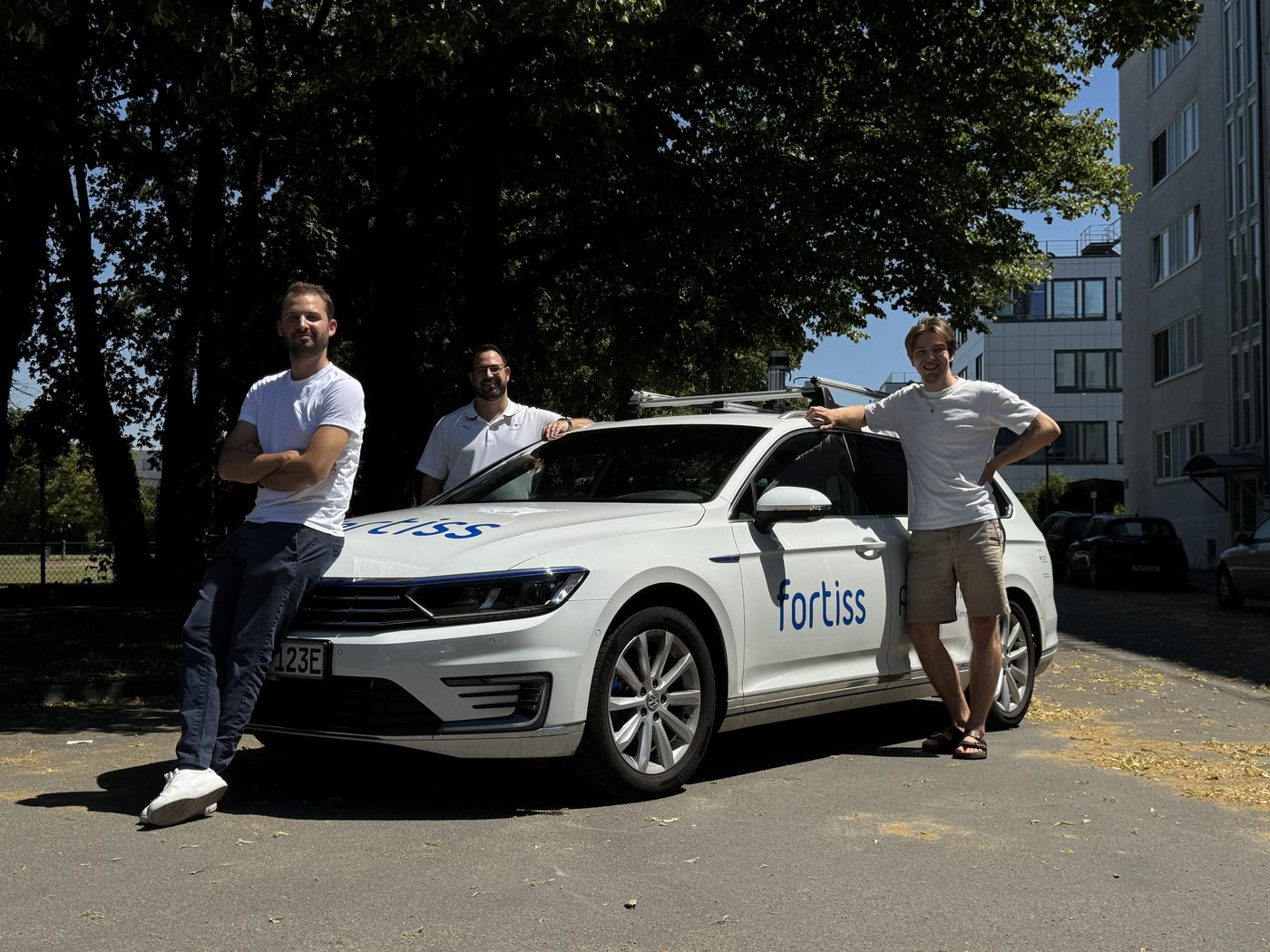
Matthias Weil, Andrea Stocco, and Stefano Carlo Lambertenghi next to Fortuna

Bachelor’s thesis

Matthias Weil

As a bachelor’s student, Matthias co-led the real-world perturbation study that became our ASE 2026 paper: 72 camera and LiDAR perturbations compared across offline analysis, hardware-in-the-loop execution, and 740+ closed-loop runs on the physical vehicle.

Read the paper
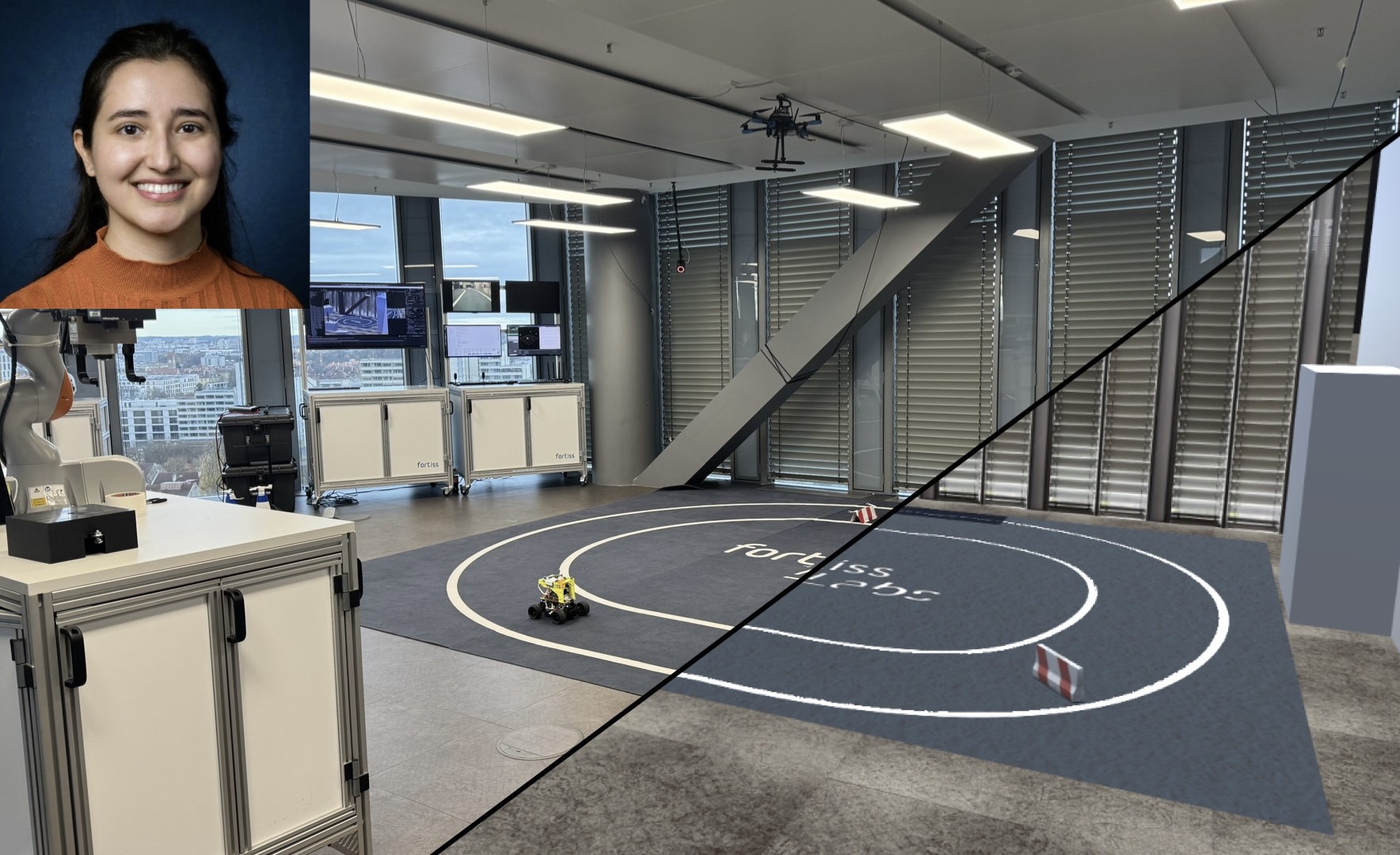
Mirena Flores Valdez, and a split view comparing the real fortiss Labs test room with its simulated digital twin

Master’s thesis

Mirena Flores Valdez

Her master's thesis became the ASE 2025 study comparing simulation, vehicle-in-the-loop, and mixed-reality testing on the small-scale platform.

Read the paper
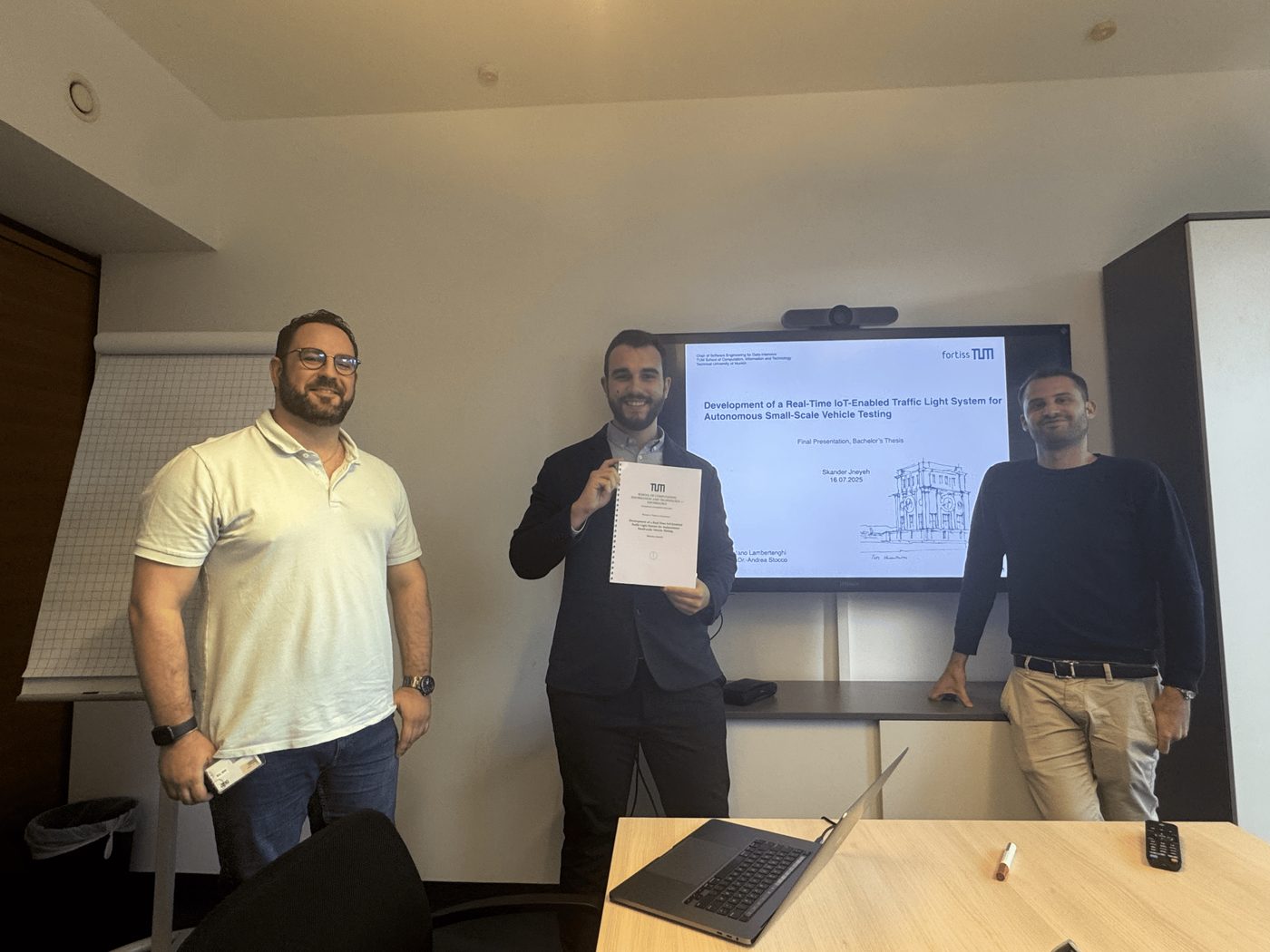
Skander Jneyeh presenting his bachelor's thesis alongside Stefano Carlo Lambertenghi and Andrea Stocco

Bachelor’s thesis

Skander Jneyeh

For his bachelor’s thesis, Skander built a physical, IoT-connected traffic-light system for the small-scale platform, so the vehicle can detect and react to traffic lights through camera perception or direct communication.

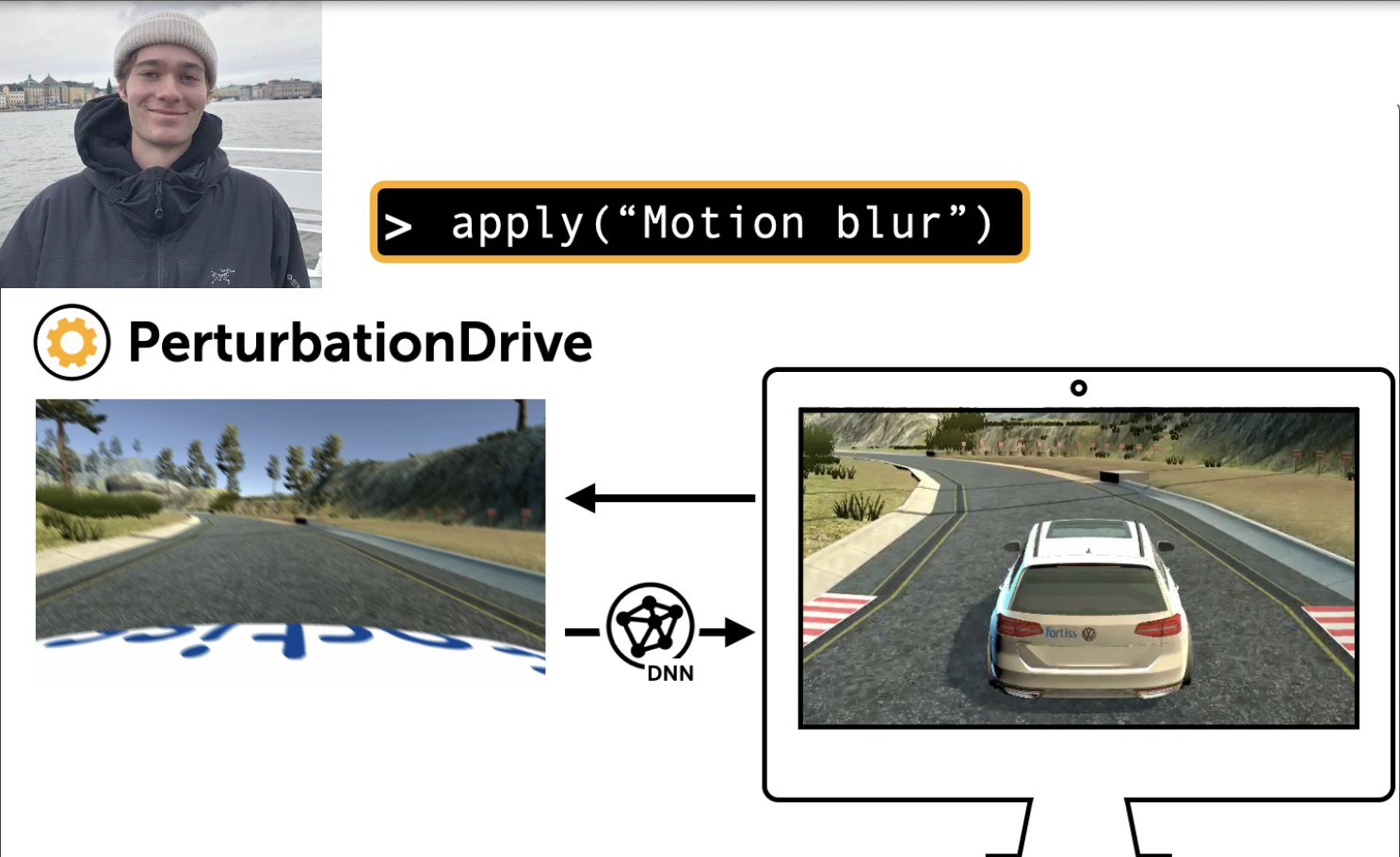
Hannes Leonhard, and a diagram of PerturbationDrive applying motion blur to a camera feed before it reaches the driving model

Bachelor’s thesis

Hannes Leonhard

As a bachelor's student, Hannes built PerturbationDrive, the image-perturbation framework for testing automated driving assistance systems. His thesis was the basis for both the framework and the ICST 2025 paper benchmarking it.

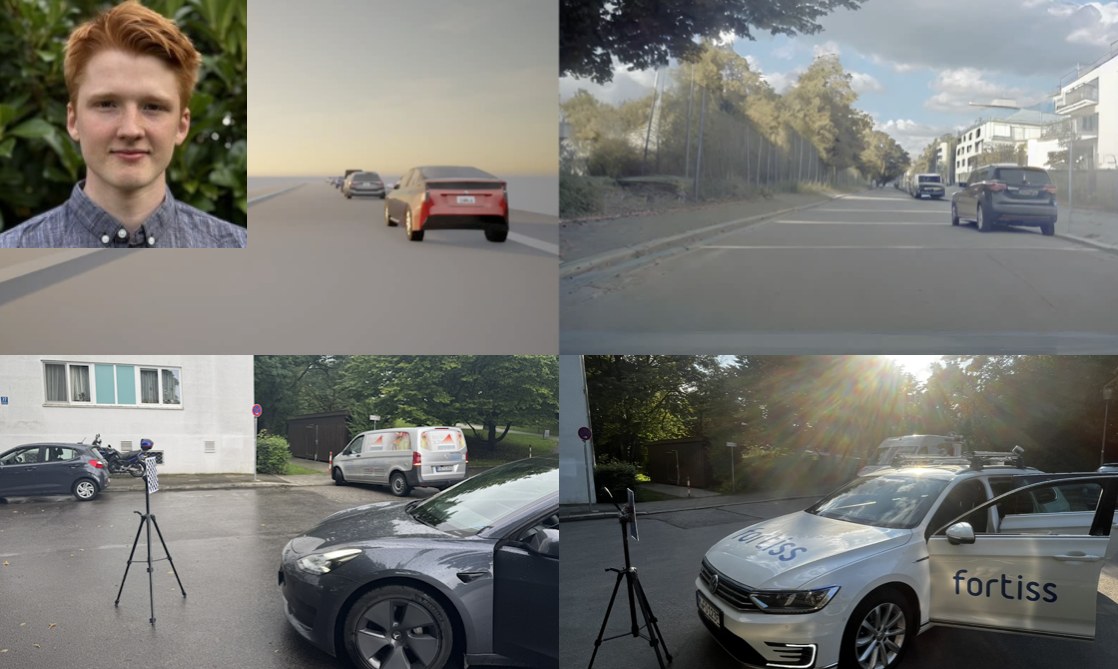
Constantin Carste, next to CARLA reconstructions and photos of the Tesla Model 3 and Fortuna used to record real driving data

Bachelor’s thesis

Constantin Carste

Constantin's bachelor's thesis used Stable Diffusion and CARLA to reconstruct real driving scenarios and automatically generate matching road layouts from recordings taken on a Tesla Model 3 and on Fortuna—the basis Cam2Sim was later built on.

Read the paper
  • Timo Götz

    Timo's industrial thesis, done in collaboration with BMW, automatically validates acoustic test-bench recordings of electric motors—separating whether a test ran the right physical scenario from whether the recorded signal itself is trustworthy.

  • Gökce Sengün

    Gökce's thesis extends the ICST 2024 quality-metrics study to system-level testing: instead of checking offline model accuracy alone, it tests whether the same image-quality metrics also predict how the driving system behaves on a physical vehicle.